Grabbed this compact USB motion sensor light off the bench. Wanted to know if it earns a spot in the hallway or just sits in a closet. Cracked the case, poked at the battery, looked over the PIR module. Build quality tells you a lot on these cheap units.
Author: LifeKaki
⚡ Quick Guide: How to Inspect and Test a Motion Sensor Light
- Unbox the unit and check the included mounting plate and charging cable.
- Pop open the plastic case to inspect the internal printed circuit board.
- Locate the passive infrared sensor and SMD LEDs on the board.
- Check the internal lithium battery size and capacity.
- Test the lighting modes and sensor response time in the dark.
📋 In This Article
📊 Technical Specifications & Components
| Battery type | Lithium-ion |
| Battery dimensions | 20×30 mm |
| Battery capacity | 150 mAh |
| Sensor type | PIR motion sensor |
| Lighting elements | SMD LEDs |
📊 Project Overview & Costs (USA Market)
🔧 Difficulty Level: Low (Beginner)
⏱️ Time Investment: DIY: 10 – 15 mins | Pro: 5 mins
💰 Professional Service Cost: $25 – $40 flat rate
💡 Verdict: Opening the case shows what’s really inside. Cheaper than buying a replacement on a guess.
Tools & Materials Used
🔧
DIGITAL CALIPER Measuring micrometer DGQIBU
AliExpress 🛒
🔧
DT9205A Digital Multimeter
AliExpress 🛒
🔧
Screwdriver Set For Gadgets
AliExpress 🛒
🛠️
BUY ON ALIEXPRESS 🛒
Recommended
Tested Component
Step-by-Step Teardown & Testing
Box Contents and Mounting Accessories
Dumped the box on the bench. Light, short micro-USB cable, stamped steel plate, sticky pad. That’s it. The lamp snaps to the plate with a magnet — no screws, no wiring. Charging indicator glows red on the board. Took maybe thirty seconds to mount. The magnet grips tight, no wiggle. For a hallway or closet this is plug-and-play.
Case Teardown and Internal Layout
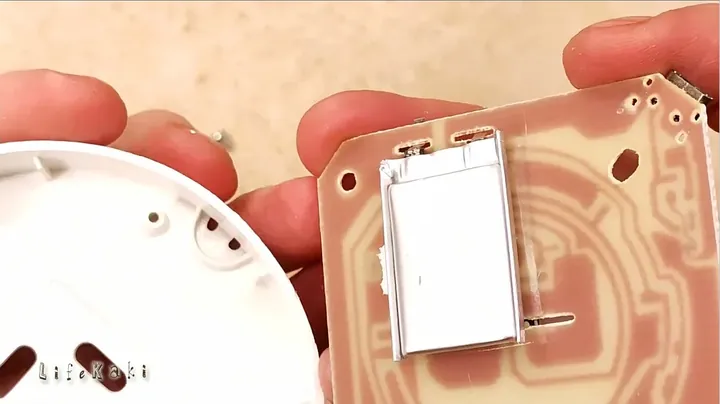
Popped the seam with a plastic pry tool. Tabs held fine, no cracks. Inside: a PIR sensor in the middle of the board, SMD LEDs around it, and a small lithium pouch underneath. Solder joints look tidy for the price. Nothing rattles when shaken. Snapping the shell back together takes a bit of thumb pressure but it closes flush.

Lithium Battery Inspection and Measurements
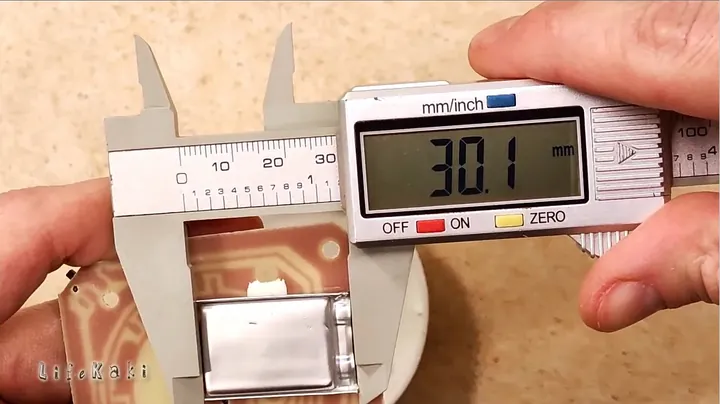
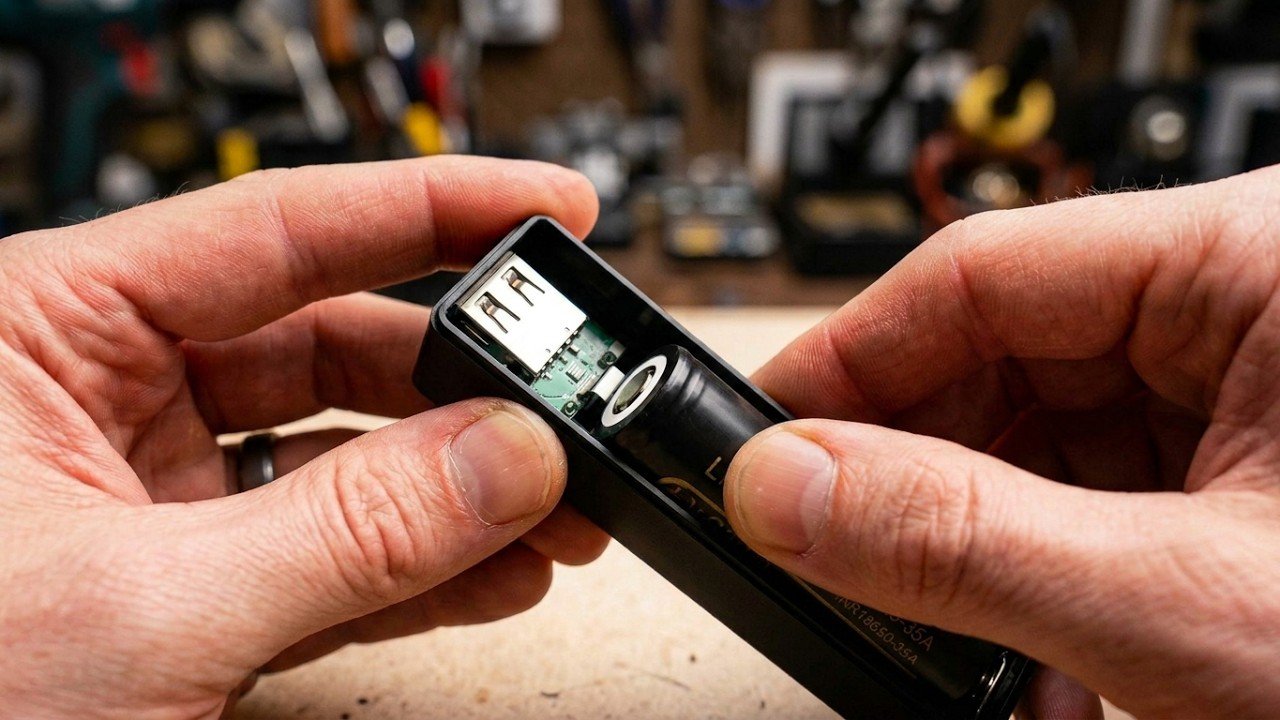
The battery is tiny. No label on the foil wrap, but it measures like a standard 150 mAh cell. Calipers read 20 mm wide, 30 mm long. Good to know if this one dies — replacements are cheap and easy to source. Nothing exotic. Standard 3.7V single-cell pouch.
Lighting Modes and Mounting Options
Switch has three positions: auto, off, always-on. Auto mode is the useful one — sensor trips the LEDs when something moves past the lens. Bought this to sit under a shelf, so the magnet plate made more sense than drilling holes. Even in auto mode the trip response was fast, no noticeable lag.
Final Dark Room Test and Performance
Killed the shop lights. PIR caught movement right away. Bright enough for a corner or as a backup when the power goes out. Walked past it a few times to check consistency — same trip every pass. Bought this myself, no free sample, so nothing to spin here. For a cheap module it does what it claims.

Precision Measurements and Final Checks
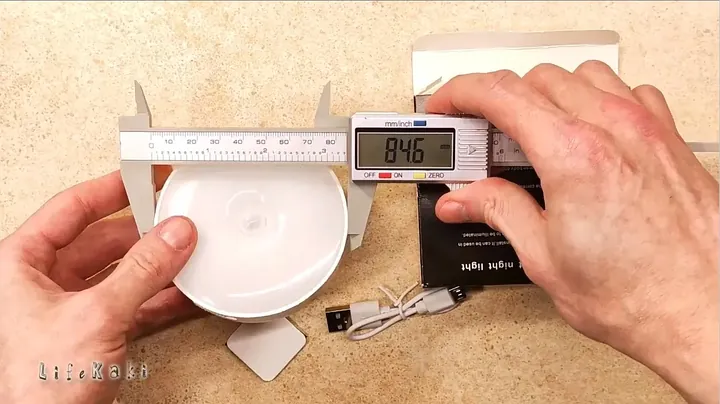
Last thing before closing up: outer diameter and thickness with the calipers. Matters if you’re sticking this under a low shelf — clearance is tight. Sensor dome sits flush, no gaps. Shell clamps down firm. Feels solid enough for daily use.
⚠️ CAUTION: SAFETY WARNING!
Safety Warning: Avoid puncturing or short-circuiting the lithium-ion cell during disassembly to prevent thermal runaway hazards.
Summary & Tips
Not a powerhouse, but for a cheap USB light it gets the job done without getting hot. Checked the battery leads before sealing it back up — those are the joints that fail on cheap units. For hallway or closet duty, this one earns its spot.
📋 FAQ
❓ Is the internal battery user-replaceable?
Yes, with a soldering iron. It’s a standard 3.7V single-cell pouch. Pry the seam, desolder the leads, drop in a new cell.
❓ Does the unit operate continuously in ON mode?
Yep. Slide switch to ON and the LEDs stay lit until the battery dies or you flip it off. AUTO is the smarter pick if you don’t want to recharge often.
❓ Is the magnetic mounting base suitable for automotive applications?
Nope. The magnet is meant for a steel shelf or cabinet, not a moving car. Road vibration will knock it loose.
Disclaimer: All testing tools and hardware featured in this guide were purchased independently. This article contains affiliate links that generate a commission from qualifying sales at no added consumer cost.
🛒 Useful Links & Products
Tested Component
🛒 BUY ON ALIEXPRESS



Leave a Reply